
Generative AI#
Generative AI is artificial intelligence capable of generating text, images and other types of content .
What makes it a fantastic technology is that it democratizes AI, anyone can use it with as little as a text prompt. A sentence written in a natural language.
There’s no need for you to learn a language like Java or SQL to accomplish something worthwhile, all you need is to use your language, state what you want and out comes a suggestion from an AI model.
The applications and impact for this is huge, you write or understand reports, write applications and much more, all in seconds.
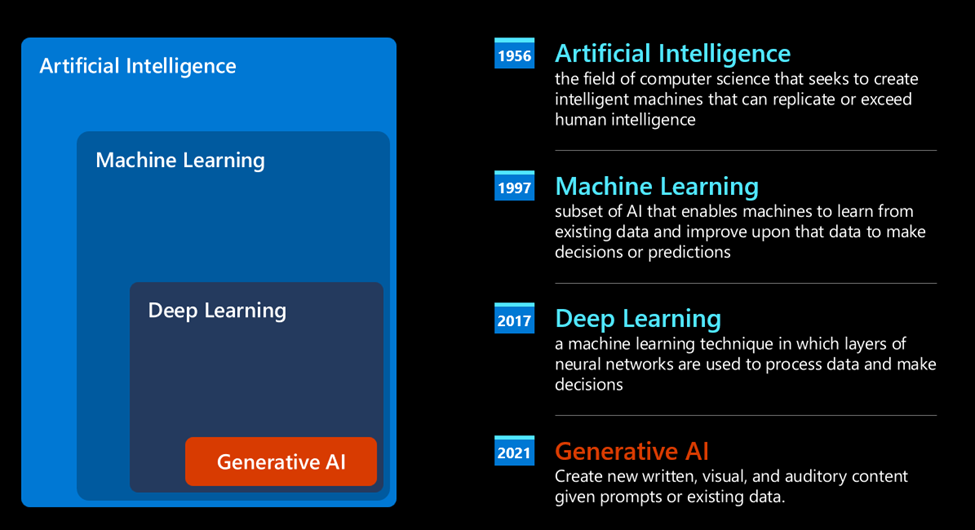
Timeline#
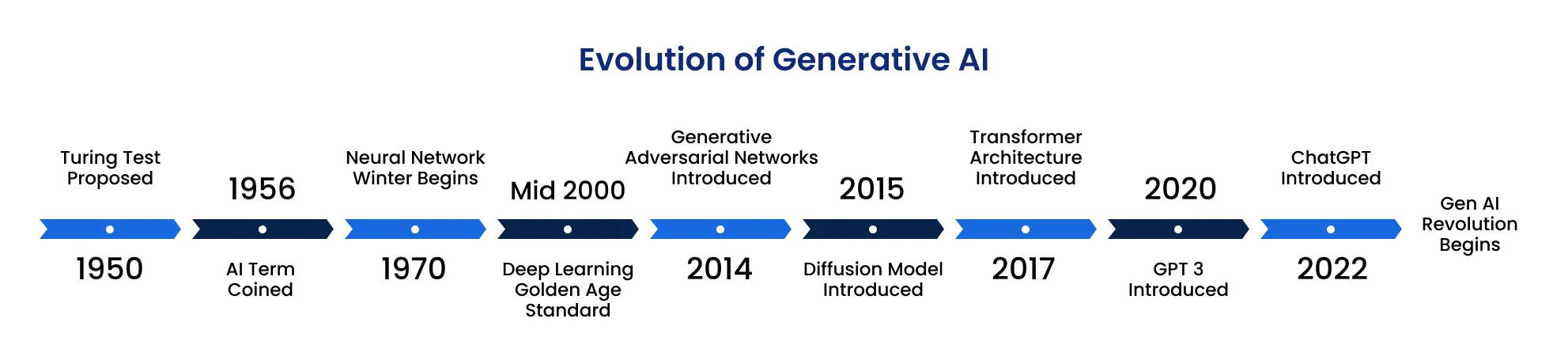 Source: https://www.brilworks.com/blog/evolution-of-generative-ai/
What led to rapid evolution of generative AI ?#
👉 Advances in computing power, including the development of GPUs (Graphics Processing Units) and specialized hardware like TPUs (Tensor Processing Units), have enabled the training of large-scale generative models more efficiently.
👉 The proliferation of the internet and digital data has provided vast amounts of training data for AI systems. This allows generative models to learn and produce more accurate outputs.
👉 Continuous improvements in generative AI algorithms and training techniques have played a significant role. Techniques such as attention mechanisms, self-attention, and reinforcement learning have contributed to the effectiveness of generative models.
Advances in natural language processing research have been crucial for text generation tasks.
Modules#
How Generative AI works#
Take a look into an awesome explaination from the blog Generative AI exists because of the transformer